
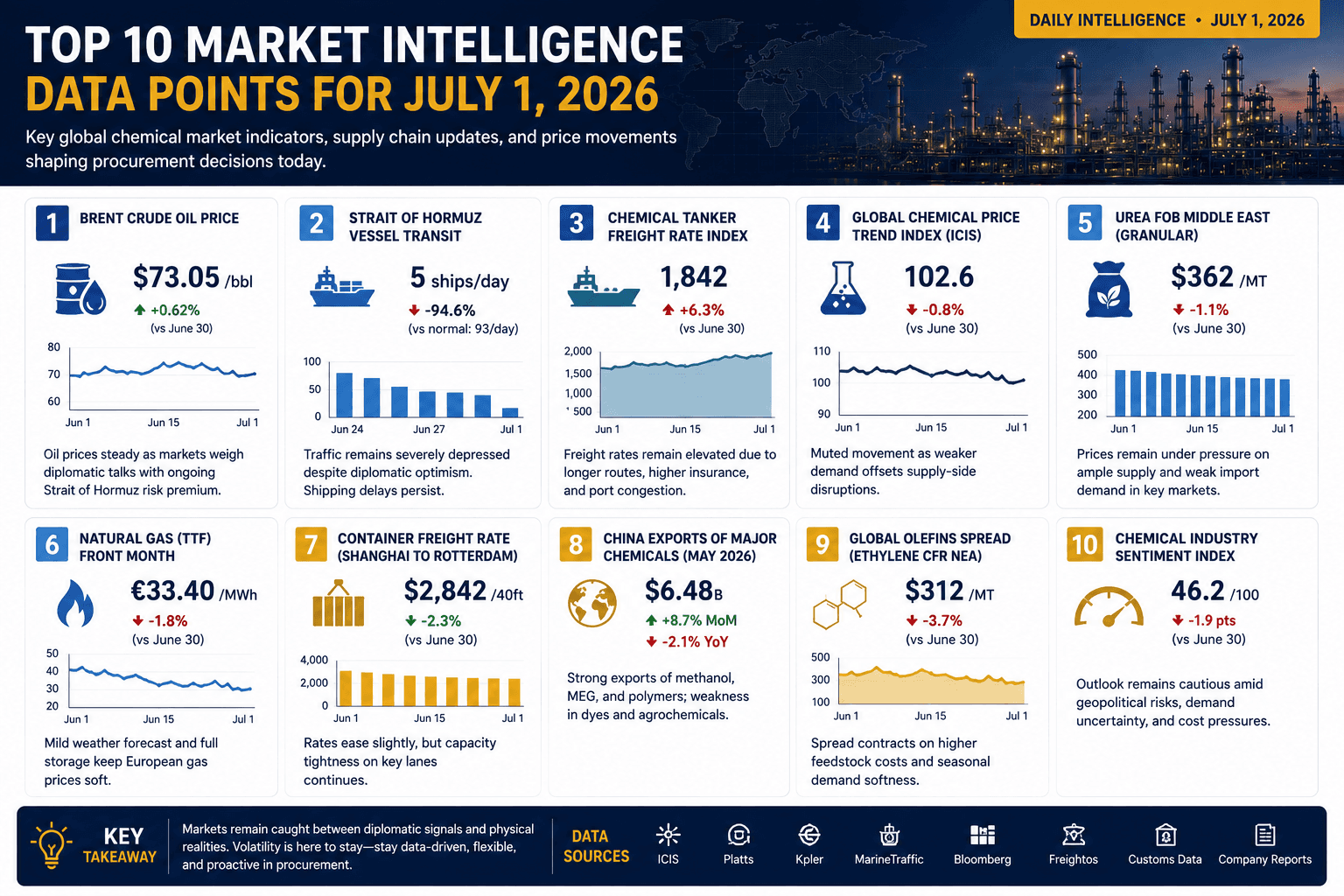

Related Insights

UAN Demand Surges in Europe as Subsidy Rules Shift Buyers Away from NPK
Europe’s fertilizer market is witnessing a sharp rise in UAN fertilizer demand as new subsidy policies redirect growers from traditional NPK blends. This shift is reshaping procurement strategies and regional supply chains, with significant implications for agricultural chemicals. The article explores the drivers, impacts, and future outlook for UAN in the continent.

Venator’s Financial Distress Signals a White Pigment Shortage in H2 2026
Venator Materials’ looming debt restructuring could reduce European TiO2 output, tightening supply for coatings, plastics, and paper. With Gulf feedstock constraints and high shipping costs, the industry faces higher lead times and costs. Buyers must now assess supplier stability as a core procurement factor.

China Chemical Watch: H1 2026 Closing Review, The World's Swing Supplier and What Buyers Should Expect in H2
China's chemical industry ended H1 2026 as the world's primary swing supplier, filling supply gaps created by disruptions in Gulf exports. As Middle Eastern production steadily returns, procurement teams must determine which Chinese export advantages remain permanent and which were driven by exceptional market conditions.
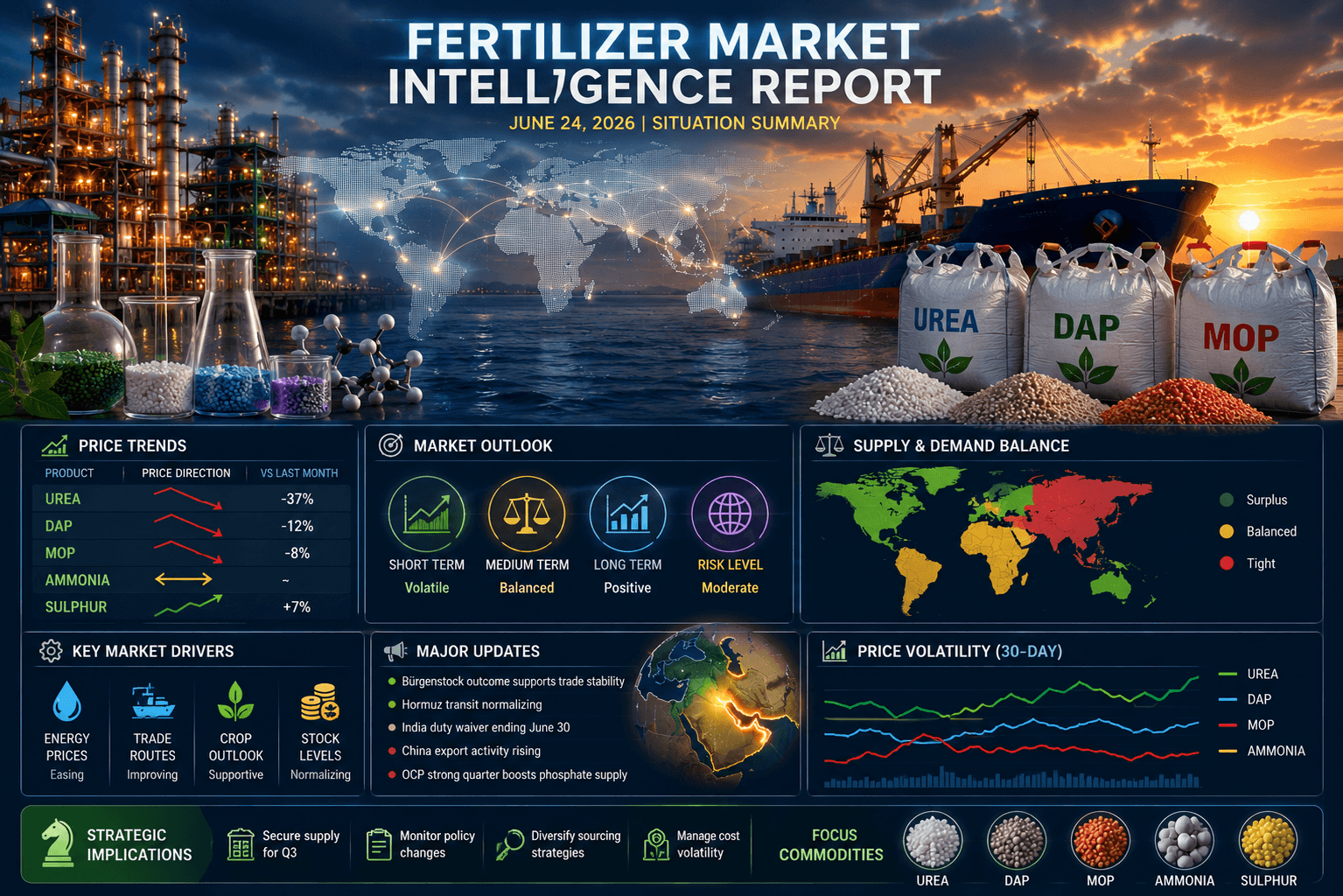
Fertilizer Market Intelligence Report: June 24, 2026 Situation Summary
Global fertilizer markets are stabilizing after months of disruption, but June 2026 remains a critical procurement window. Urea prices are down 36%, ammonia exports may restart in July, and fertilizer buyers must navigate supply recovery, policy deadlines, and pricing uncertainty.

Sorbitol: June-July Procurement Window as Thai Supply Enters Seasonal Gap
Thai sorbitol production is tightening as the annual tapioca feedstock gap reduces output, while Chinese suppliers continue operating at stable capacity with competitive export pricing. Procurement teams planning H2 2026 purchases have a valuable opportunity to lock in improved delivered costs before seasonal market dynamics shift again.
Why Brent Is $72.60 Despite Active Drone Strikes: What the June 29, 2026 Oil Market Paradox Means for Chemical Buyers
Brent crude has dropped to $72.60 despite ongoing military escalation across the Gulf. This unusual market reaction signals that supply recovery currently outweighs geopolitical risk, creating important implications for petrochemical procurement and chemical pricing in the months ahead.
Don't miss out on our updates! Subscribe to our newsletter now
We're committed to your privacy. Tradeasia uses the information you provide to us to contact you about our relevant content, products, and services. For more information, check out our privacy policy.